


The Port of Algeciras Showcases a Complete Logistics Chain for Fruit and Vegetables at Fruit Attraction 2026
Algeciras Port Closes Day One of Fruit Attraction 2026 with 24 Port Community Companies, 5,500+ Reefer Plugs and Capacity for 30,000+ Pallets
The APBA is accompanied by 24 companies from its port community, with more than 5,500 reefer connections, capacity for over 30,000 pallets, and services covering transport, customs, storage, inspection and distribution.
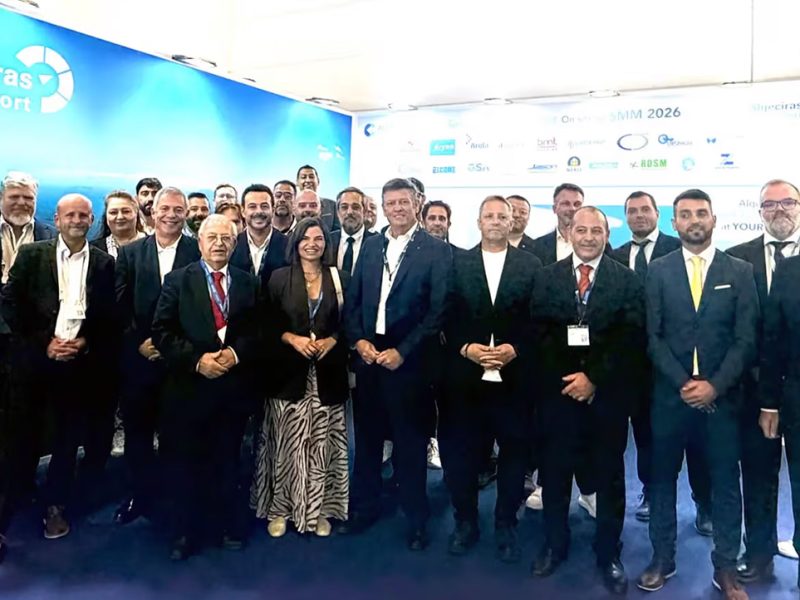
The Port of Algeciras has wrapped up the first day of Fruit Attraction 2026 with a delegation made up of the Port Authority of the Bay of Algeciras (APBA) and 24 companies from its port community. The delegation is taking part until Thursday at IFEMA Madrid, from the Puertos del Estado (Spanish State Ports) stand, where it is focusing its commercial activity on the services available to international fruit and vegetable supply chains.
Algeciras is attending the largest edition of Fruit Attraction to date. The fair brings together 2,500 exhibitors from 78 countries from Tuesday, covers 162,000 square metres across ten halls, and expects 121,000 professionals from more than 150 countries. Around 70% of the floor space is devoted to Fresh Produce, while areas such as Fresh Food Logistics group the transport, storage, cold chain and technology services associated with the international movement of fresh produce.
Against this backdrop, the Port of Algeciras’ offer is built around a business community covering the different stages of a single shipment. Container terminals, cold stores, customs representatives, freight forwarders, road haulage operators, reefer specialists, maritime services, Ro-Ro links, and handling and logistics companies form a chain that can start on a farm in Morocco, Central America or South America and end at a distribution platform in Spain or another European market.
Cold chain infrastructure is one of the main pillars of this offer. The Port of Algeciras’ two container terminals have more than 5,500 reefer plugs between them, monitored 24 hours a day for import, export and transhipment operations. Added to this are cold storage terminals and logistics areas close to the port, with combined space for more than 30,000 pallets.
TTI Algeciras provides 1,518 of those reefer plugs at Isla Verde Exterior. The terminal can stack reefer containers four high, has direct rail access, and currently has a design capacity of 1.6 million TEU per year, which will rise to 2.1 million with the planned development of Phase B by 2028.
Beyond the terminals, the reefer container chain continues in specialised storage facilities. Americold operates at the Isla Verde Quay with ambient, chilled and frozen storage areas, as well as import, export and bonded warehouse services. SAM Algeciras offers 6,300 square metres of cold storage, eleven dual-temperature chambers and capacity for more than 8,700 pallets, plus fifteen loading and unloading docks.
Other companies in the port’s hinterland add further capacity. Transbull has more than 2,400 square metres of temperature-controlled space and 21 refrigerated loading docks. Nieves Operador Logístico combines ambient, chilled and frozen warehousing with temperature-controlled transport, while other companies in the delegation offer storage, consolidation, cross-docking, order picking and perishable cargo handling as part of wider logistics networks.
Cold chain services go beyond storage. Raminatrans has a reefer division handling full loads, groupage, air freight, road and maritime operations, together with temperature-controlled storage, consolidation and cross-docking. TIBA has a dedicated perishables division covering fresh, frozen and dehydrated fruit and vegetables, while LeoProex reports more than twenty years of experience in reefer transport as part of a multimodal offer combining sea, road, air and rail.
This capacity serves an increasingly diversified range of trade lanes. Reefer cargo at the Port of Algeciras grew by 4% year to date through August 2026. Costa Rica and Peru remain among the main origins, while Egypt has grown by 185% since 2024, mainly driven by citrus. Pineapple, avocado and banana are among the most prominent imports, while stone fruit (apricot, peach and cherry) features among the exports. According to figures released by the APBA, cassava imports have grown by 111%.
The Latin American connection therefore accounts for a specific part of the commercial activity in Madrid. UCC Iberia operates through a network with a presence in Chile, Peru, Colombia, Costa Rica, the United States and Spain, and specialises in maritime transport and logistics for perishable cargo. TIBA, LeoProex, Raminatrans, ECS 360 Logistics and Total Logistic Services also offer international shipping, reefer, forwarding and multimodal services that link Algeciras with producing markets in the Americas.
Algeciras’ profile at Fruit Attraction is not limited to transoceanic trades, however. The Strait of Gibraltar is another of the key corridors in the offer presented this week, particularly for Moroccan agricultural products entering the European Union.
DFDS Iberia operates the Ro-Ro cargo link between Algeciras and Tanger Med, equipped for semi-trailers and reefer containers. The scheduled crossing takes one and a half hours, and the carrier runs at least two daily sailings in each direction for unaccompanied units, in addition to services for accompanied traffic. The cargo terminals operate 24 hours a day.
Transport and logistics companies in the delegation also work this corridor. Transportes Bolipesk combines its own fleet, refrigerated transport and customs clearance between Morocco and Europe. Nieves moves fruit, vegetables and other foodstuffs between Tanger Med and ports in southern Spain, while Marítima del Estrecho includes refrigerated trucks in its land transport offer. ECS 360 Logistics also provides services between Spain, Europe and Africa, along with international maritime transport to other markets.
The Ro-Ro model allows part of the fruit and vegetables coming from Morocco to travel in the same transport unit before and after the sea crossing. Tomatoes, berries, avocados and other products arrive at the port on trucks or semi-trailers and, once the relevant procedures have been completed in Algeciras, can continue by road to their destinations in Spain or other European countries.
Border procedures are another area on which the port community’s participation is based. A significant number of the companies travelling to Madrid work in customs representation, transit and the coordination of official controls on products from third countries.
AGSA-Partida, Algetransit, Proex Logistics, Customs Support (through the Tránsito 2000 structure), Bernardina Aduanas y Transportes, Total Logistic Services, Salvat Logística and Transsur provide a range of services related to imports, exports, transit operations and procedures before control authorities. Other operators in the delegation add customs management as part of a broader transport or storage offer.
The Algeciras Border Control Post (BCP) handles a share of these procedures. Goods subject to control may require sanitary, phytosanitary, veterinary or commercial quality inspections before leaving the port area. Some companies keep operational staff at the facilities themselves or nearby to follow up files and coordinate inspections.
In parallel, the APBA is moving ahead with the BCP expansion project, with an investment of more than €17 million. The works will increase the number of plant inspection bays from 12 to 30, along with upgrades to the refrigeration and air-conditioning systems. The expansion builds on the appointment-based management model first introduced in Algeciras and later extended to the rest of Spain’s ports.
Document management for these goods links to another project the Port Authority is showcasing at Fruit Attraction: interoperability between SIECA’s Central American Digital Trade Platform and the Port Community System of the Port of Algeciras.
The project is aimed at the digital exchange of phytosanitary and zoosanitary certificates and other documentation related to trade between Central America and the European Union. The initiative is part of the Global Gateway strategy and seeks to allow some of the information needed for entry procedures to be transmitted electronically from the country of origin before the cargo arrives.
This line of work will continue on 17 and 18 November, when Algeciras will host an EU–Central America High-Level Mission, with the expected participation of Central American economy and trade ministers, representatives of the European Union and Spain, logistics operators and exporting companies.
Digitalisation also extends to road traffic. In Madrid, the APBA is presenting new features of Teleport 2.0 for heavy vehicle traffic management, a tool directly linked to the thousands of trucks and semi-trailers using the Strait crossings and to movements associated with the port’s terminals and logistics services.
The chain presented at Fruit Attraction also includes the operations required once the cargo is inside the port area. Tramarco provides shipping agency, handling, loading, unloading, transhipment and transport services associated with inspections and deliveries. Logistika 360 works in Ro-Ro stevedoring, horizontal transport and port movements, activities related to the loading and discharge of the rolling units used on the Strait services.
Other operators extend the distribution radius after clearance. Salvat Logística has a network with capacity for more than 48,000 Euro pallets and road transport services to various European markets. Total Logistic Services combines road, sea, air and multimodal transport, while Marítima del Estrecho integrates refrigerated transport, customs services and a warehouse network between Málaga and Algeciras. These structures connect the arrival of cargo at the port with logistics platforms and final destinations outside the Bay.
Fruit Attraction thus serves as a meeting point for two traffic models that converge in Algeciras. On one side are products from the Americas, Africa and other markets arriving in reefer containers on long-haul shipping services. On the other is agricultural cargo crossing from Morocco on the Strait’s Ro-Ro links and continuing by road.
The first day also put the business community in direct contact with producers, importers, exporters, distributors and transport operators. Algeciras companies held their own meeting schedules during the day at a fair where logistics has a dedicated space alongside the production and marketing of fruit and vegetables.
The APBA and the 24 companies will remain at the Puertos del Estado stand until Thursday, 8 October. Over the remaining two days, the delegation will continue its commercial activity around reefer traffic, links with Morocco, Central America and South America, border services, and the transport and storage solutions that make up the fruit and vegetable chain linked to the Port of Algeciras.
Source: El Estrecho Digital